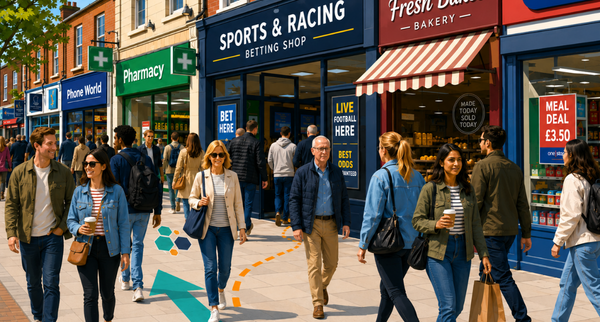
Choosing the right location for a betting shop involves balancing a wide range of factors.
Potential demand matters, but so do the characteristics of the local population, footfall and movement patterns, accessibility, nearby amenities, competitor locations and the performance of any existing branches nearby. Location Intelligence can bring these different factors together, helping operators compare potential locations and make decisions based on evidence rather than assumptions.
So, what should you consider when assessing a potential betting shop location?
1. Understand the local catchment
A good starting point is understanding the people who live, work and spend time around a potential location.
Demographic and consumer data can help build a clearer picture of the local population and identify differences between potential catchments. The important question isn’t simply whether enough people live nearby. It’s whether the characteristics of that catchment suggest sufficient potential demand for the location.
For operators with an existing estate, customer and performance data can add another layer of insight. Comparing successful locations can help identify characteristics that could indicate potential elsewhere.
2. Look at footfall and movement patterns
A location can appear busy without necessarily attracting the right type of footfall.
Understanding how people move through an area can therefore provide a much more useful picture than looking at overall footfall alone. How does activity change throughout the day or week? Where are visitors travelling from? Are they commuters, local residents or people visiting the area for another reason?
These patterns can help operators understand when and how a location is being used and compare seemingly similar sites more accurately.
3. Consider accessibility and surrounding amenities
Betting shops form part of a wider local environment, so it’s important to understand what else surrounds a potential site.
Public transport, parking, shops, leisure facilities and other amenities can all influence how people use an area. A location close to established shopping or transport routes, for example, may benefit from people already passing through the area as part of their normal routine.
Looking at the wider location rather than an individual property in isolation can provide a much better understanding of its potential.
4. Understand the competition
Competitor proximity is another important part of location planning.
The presence of competing betting shops could indicate established local demand, but it could also mean that a catchment is already well served. Mapping competitor locations alongside demographic, movement and other market data can help operators understand where competition is concentrated and where there may be gaps in provision.
The same analysis can also help assess the potential impact of a new location on an operator’s existing estate.
5. Compare locations using more than one measure
No single dataset can tell you whether a location is right.
A site with strong footfall might have less attractive demographics. Another may have a good target audience but poor accessibility. A third could look promising until competitor presence is taken into account. Bringing these different factors together makes it easier to compare potential locations consistently and understand the strengths and weaknesses of each.
This is where Location Intelligence becomes particularly valuable. Instead of making separate decisions based on individual datasets, operators can build a more complete picture of each location.
6. Factor in local licensing requirements
Commercial potential isn’t the only consideration.
Betting premises in Great Britain require a premises licence from the relevant local licensing authority, alongside the appropriate operating licence from the Gambling Commission. Local licensing policies and the individual circumstances surrounding a proposed location therefore need to form part of the site assessment process.
Understanding these requirements early can help avoid investing time and resources in a location that may prove unsuitable.
Making more informed location decisions
There is no single formula for the perfect betting shop location.
The strongest location decisions come from understanding how factors such as catchment characteristics, customer demand, footfall, accessibility and competition work together. Periscope® brings location, demographic, consumer, competitor and movement data together, helping businesses compare potential sites and understand the opportunities and risks surrounding different locations.
See how Periscope® can help you make more informed location decisions.